Specific Topics Regarding These Crabs
Hey! This page is here to specifically detail certain things about Japanese Spider Crabs, all contained within this page and their own little sections, which can be turned on or off at your comfort.
Bookmark Jumps
- Eating Habits and Diet
- General Habitat(s)
- Reproduction Process
- Exoskeletons
Eating Habits and Diet
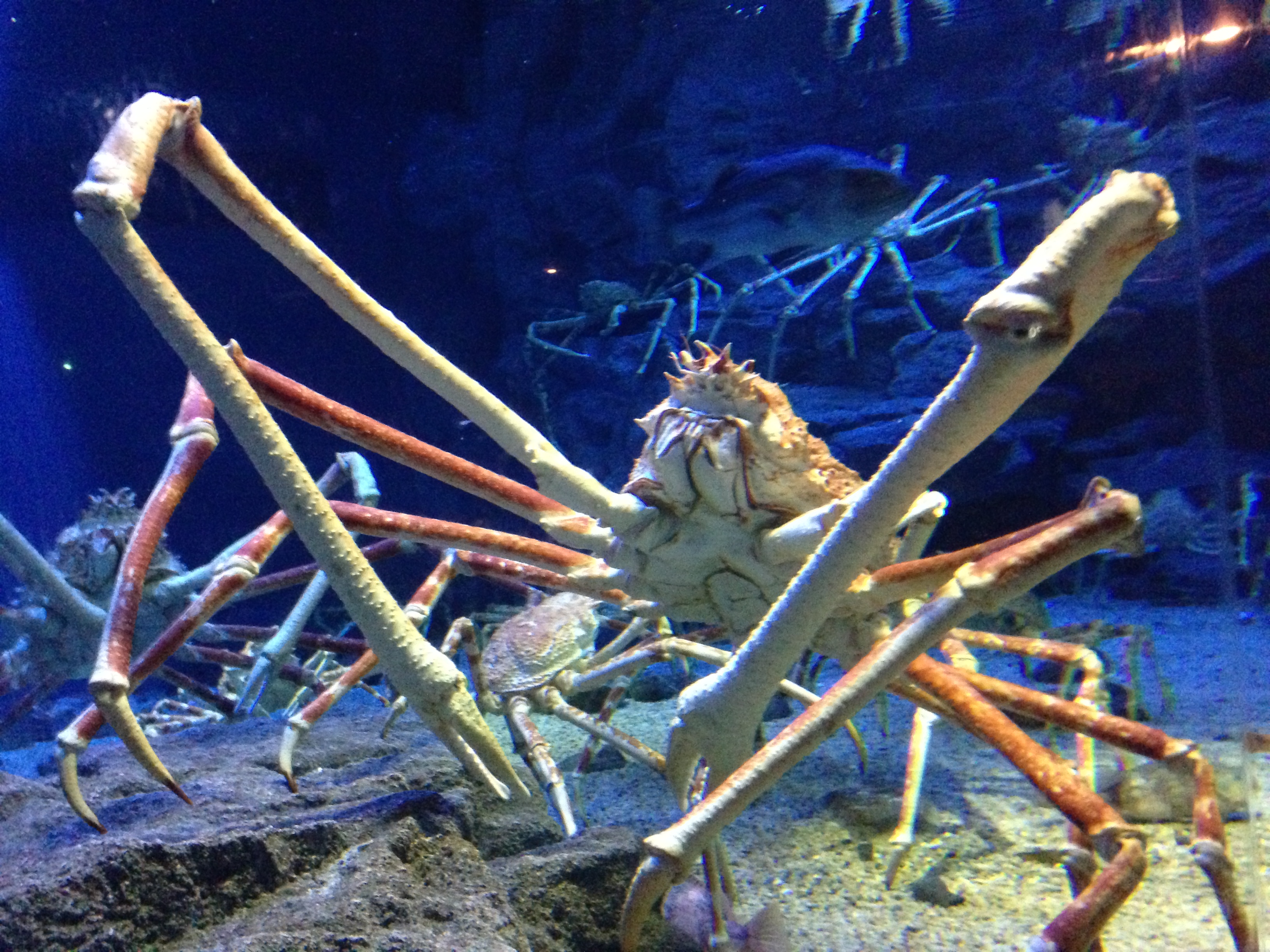
For a quick elaboration on a spider crab's overall diet; They're omnivorous and they're scavengers. It's mostly simple to that point. This diet can include fish that are a lot smaller than it, dead organic matter, really just anything that's smaller than it. They don't hunt actively, and even when they do, that is a rare occurence to take place. Some specifics in its diet can include things such as dead or decaying fish, algae, mollusks, and anything decaying/dead and organic. Like mentioned before; they are scavengers and omnivorous, they'll eat whatever they find even when not actively hunting.
Where they Generally Inhabit
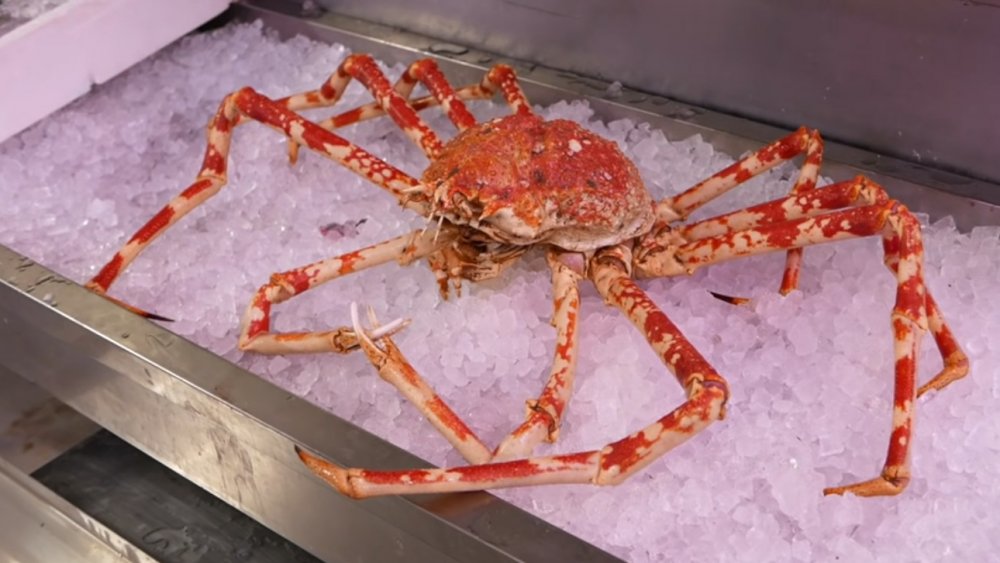
Where they live is interesting. In a general area, they're found near Japan's pacific coasts, and sometimes as far out as Taiwan. Even then, in terms of the pacific coasts of Japan, it primarily stays around the Honshu area of Japan, from the Tokyo Bay to the Kagoshima Prefecture, although outliers can exist between the Iwate prefecture and Taiwan's Su-ao.
In conjunction with this, they're usually found within the deep sea range anyway, typically in depths ranging from 50 to 600 meters (they're regularly around 300m in Suruga Bay, the temperature at 10ºC), particularly rocky and sandier bottoms due to being a benthic organism by nature, often seeking refuge in vents and holes. In addition to depth, there's also a particular temperature range they will tolerate. This usually ranges between 6ºC to 16ºC, however their preferred maintenance temperature ranges between 10ºC and 13ºC.
Reproduction Stuff
yes these things can have kids
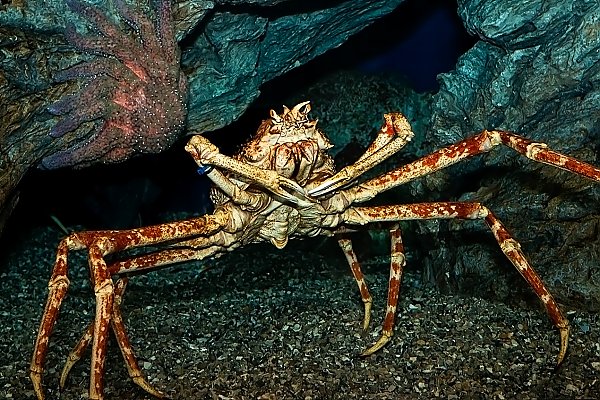
Moving up to the shallower end of their depth ranges, the mating season for Japanese spider crabs is typically between January and March, albeit general mating behavior overall is still pretty unknown. Fertilization is internal, and as a result females can AND WILL produce up to just around 1.5 million eggs, each being 0.3 inches in size. Unfortunately, however, very, VERY few of them ever actually live long enough to hatch.
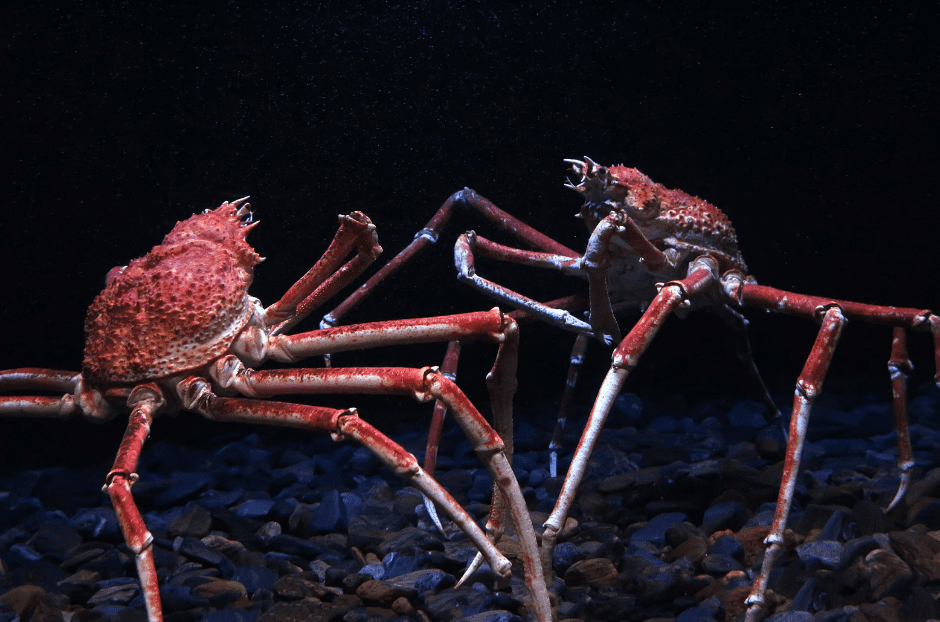
Oddly Strong Exoskeletons
These things have quite possibly some of the toughest exoskeletons a crab is able to have, most likely. They're usually either spiky or irritatingly bumpy, and are tougher whenever hardened post-molting, as they're most vulnerable right after molting/shedding and before the new shell has a chance to harden. The carapace is also interestingly pear shaped, and the legs simply just don't stop growing despite the carapace stops growing on its own. Although, despite their exoskeletons being the way they are, these spider crabs generally tend to actually be harmless to humans, also described as 'gentle giants' in such cases.